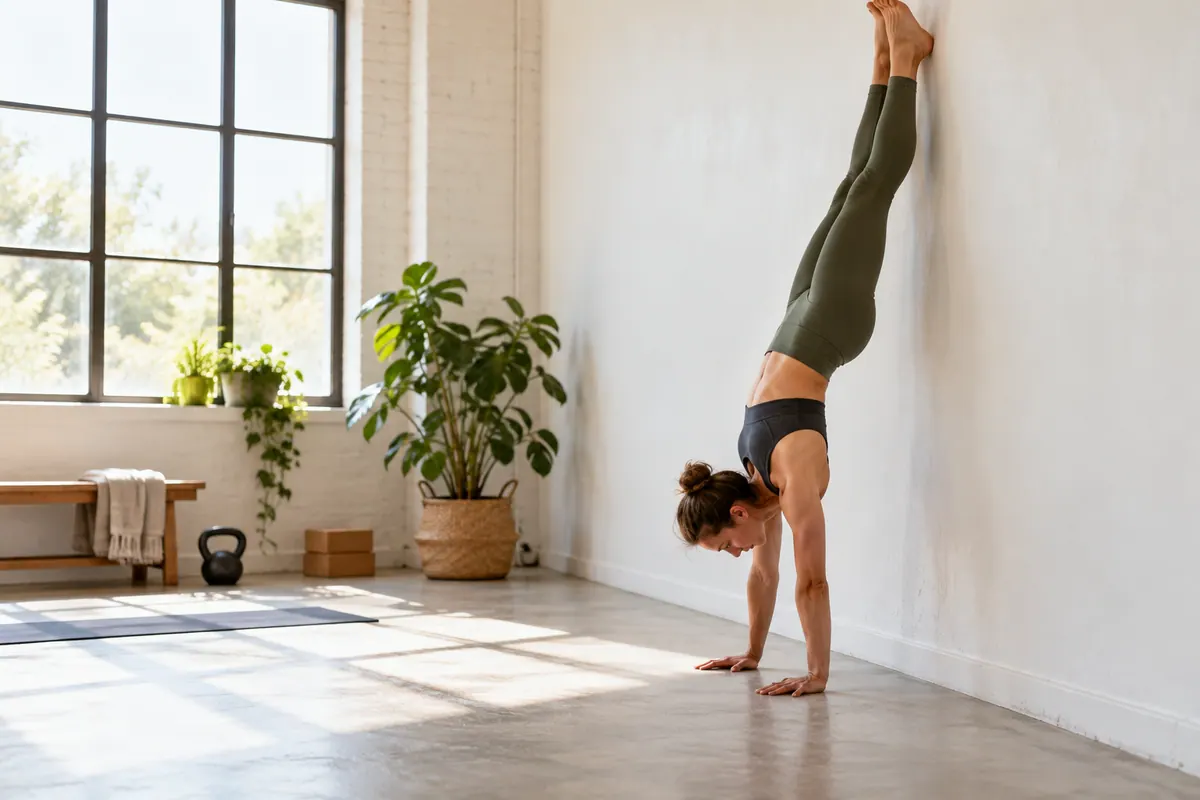
A handstand is a learned balance skill as well as a strength task. Watching a polished demonstration can hide the preparation behind it: comfortable wrist loading, shoulder control, an appropriate entry and a reliable way down. Beginners benefit from understanding those pieces before attempting repeated unsupported kick-ups.
This guide helps you organise a sensible start. It is not an individual training prescription or a substitute for someone assessing your movement in person.
Start with your circumstances
Think about previous activity, current injuries and any concerns about being upside down. If you have a medical condition or symptoms that could affect exercise, seek appropriate professional advice. There is no need to force yourself into a standard online progression simply because it is described as beginner friendly.
Tell a coach about your starting point honestly. A good learning environment allows questions and easier alternatives. You should not need to demonstrate a skill you have not yet learned in order to qualify for instruction.
Choose a suitable place to practise
A clear floor, enough space and a stable support matter more than an attractive filming background. Remove loose objects and consider what would happen if you lost balance. A wall does not automatically make an exercise safe; the entry, exit, distance and floor still matter.
Avoid practising close to furniture, glass, people walking through the space or objects that could fall. Do not treat a soft bed or an unstable surface as a substitute for appropriate coaching and equipment.
Learn the way down
Being able to get out of a position is part of learning it. A qualified coach can teach exits and spotting that fit the progression you are using. Do not improvise an unfamiliar exit after you are already upside down.
For a beginner, confidence may come from a controlled low-level exercise and a clear way to stop, rather than immediately achieving a vertical position. An exit learned in person can turn practice from a gamble into a more understandable task.
Keep the first goal small
An initial goal might be setting up consistently, understanding a coach’s cue or tolerating an appropriate preparation exercise comfortably. It does not have to be a long unsupported hold. Small goals make it easier to notice what changed and avoid repeating uncontrolled attempts merely to accumulate time.
The NHS provides general strength and resistance exercise resources. Those can support a wider activity routine, but they do not constitute a handstand progression tailored to you. Handstand technique and ordinary fitness work have related but different purposes.
Evaluate the learning environment
Ask about the coach’s relevant qualifications, how beginners are assessed and how spotting and safety are managed. British Gymnastics offers information about supervised gymnastics environments. A website’s confident tone or social-media following is not itself a coaching qualification.
Your first useful achievement is a practice setup you understand. From there, coaching and consistent preparation can help you choose the next appropriate step.
A practical example
A beginner books an introductory session instead of copying a kick-up challenge at home. They explain that their wrists have occasionally been uncomfortable and ask how to start. The coach assesses the setup, chooses an appropriate preparation task and teaches how to stop. The learner leaves with one clear focus and a safer understanding of what needs attention before progressing.
Your next steps
- Check whether injuries or medical concerns require professional advice.
- Choose a clear practice area with an appropriate floor and support.
- Ask a qualified coach to teach entries, spotting and exits.
- Set a first goal based on control and understanding rather than a hold-time promise.
Sources and scope
British Gymnastics: Parent Hub and supervised gymnastics; NHS: Strength and resistance exercise.
Keep exploring
- Wrist preparation for handstands: gradual loading and when to stop
- Wall handstand practice: the wall is only part of the setup
- Planning handstand practice without a rigid timetable
- Choosing a handstand coach or class: questions worth asking
- Recovery and everyday nutrition for handstand practice
Keep exploring the practical questions.
Explore the guides