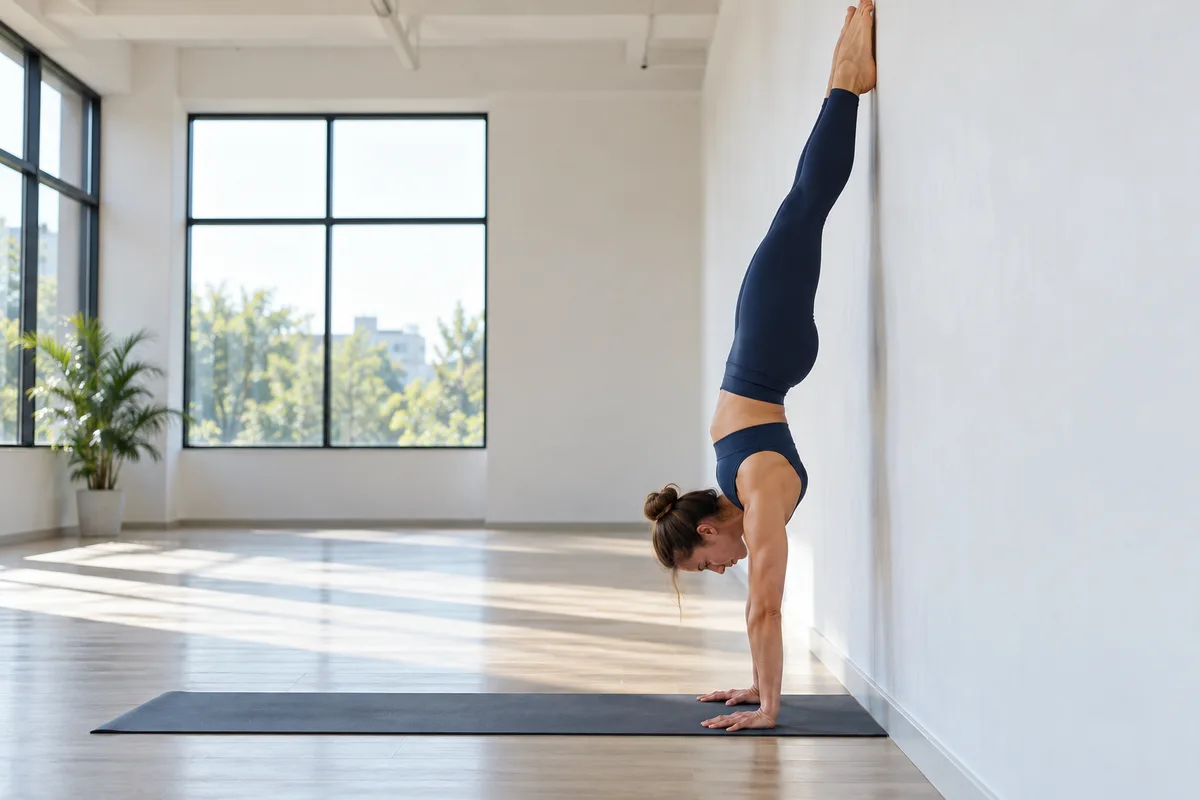
A wall can provide support during handstand learning, but it does not turn every inversion exercise into a safe beginner drill. The position of the hands, the way you enter, how you exit and the space around you all matter. A wall should be part of a progression taught for your ability, not a reason to attempt something you cannot control.
This guide explains the decisions to discuss with a qualified coach. It deliberately does not provide a step-by-step wall walk or kick-up for an unassessed learner.
Decide what the exercise is for
Different wall drills have different purposes. One may help someone understand body position; another may address weight transfer or a controlled entry. If you do not know the purpose, it is easy to spend time in a position without learning the intended skill.
Ask your coach what you should notice and what would count as a manageable repetition. The answer may concern breathing, control or a specific cue rather than how long you remain upside down.
Inspect the space
Check that the wall and floor are appropriate, that objects are removed and that you have enough room for the exit you have learned. Doors, radiators, shelves and narrow corridors create complications. A photograph of a person using a wall does not show the full setup or support available outside the frame.
Avoid surfaces where your hands or feet could slip unexpectedly. Think about other people entering the area and whether they know you are practising. If the space does not suit the exercise, choose another task or practise in a coached environment.
Entry and exit come before duration
Learn how to get into and out of the position at the level you are using. Do not hold until you are too tired to perform the exit reliably. A shorter controlled attempt can be more useful than a long attempt that ends in a scramble.
Spotting is also a skill. A friend standing nearby does not automatically know how to help safely. A qualified coach can teach appropriate support and decide whether the exercise is suitable for you.
Keep feedback simple
Choose one observation agreed with your coach. Too many cues at once can make practice confusing. If you use a video for feedback, set it up without placing a phone where you could land on it or making the filming arrangement the priority.
A useful record might say that an entry felt controlled, that the exit needed work or that the session was stopped because the wrists were uncomfortable. That is more actionable than simply recording a total number of seconds.
Progress by readiness
Moving away from the wall is not automatically the next step after a certain number of days. You need the relevant control and an exit appropriate to the next exercise. Ask your coach which signs of readiness matter.
The wall is a tool, not a timetable. Treat it as one option within a well-organised learning process, with room for easier tasks when necessary.
A practical example
A learner can remain supported by a wall but feels anxious about getting down. Instead of increasing hold time, they ask the coach to review the exit and choose a lower-demand exercise. Their next session focuses on a calm, repeatable end to each attempt. That makes the practice more useful than extending a position they cannot yet leave confidently.
Your next steps
- Ask what the chosen wall exercise is intended to teach.
- Inspect the complete floor and wall area, including the exit space.
- Learn an appropriate entry and exit with qualified support.
- Stop each attempt while you can still get down in a controlled way.
Sources and scope
British Gymnastics: Parent Hub and supervised gymnastics.
Keep exploring
- Handstands for beginners: start with preparation and support
- Wrist preparation for handstands: gradual loading and when to stop
- Planning handstand practice without a rigid timetable
- Choosing a handstand coach or class: questions worth asking
- Recovery and everyday nutrition for handstand practice
Keep exploring the practical questions.
Explore the guides